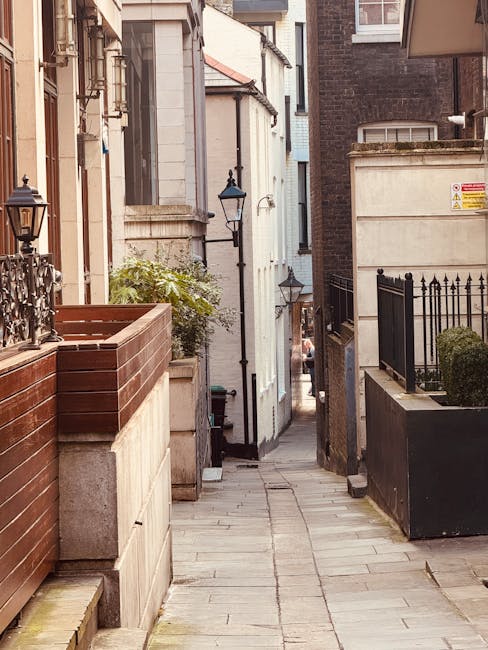
SW1X gardeners small courtyard solutions Knightsbridge: practical ideas for making a small space feel bigger, greener, and easier to live with
If you have a compact courtyard in SW1X, you already know the challenge: the space is precious, but it can also be awkward, shaded, overlooked, or simply too small to behave like a traditional garden. That is exactly where SW1X gardeners small courtyard solutions Knightsbridge come into their own. The right approach can turn a tight outdoor area into a calm, tidy, low-fuss space that feels intentional rather than cramped.
In Knightsbridge, where many homes and mews properties have courtyards, side returns, or small enclosed garden spaces, the best results usually come from careful planning rather than overfilling the area. A good courtyard design should work with the site, not fight it. This guide walks you through what works, what does not, and how to make sensible decisions whether you want a full refresh or just a smarter maintenance plan.
Below, you will find a practical breakdown of layout ideas, planting choices, hard landscaping options, maintenance realities, and a few common mistakes that can make a small space feel even smaller. Truth be told, the quickest fix is rarely the best one.
Why SW1X gardeners small courtyard solutions Knightsbridge matters
Small courtyard gardens have a different set of pressures from larger suburban plots. Space is limited, access can be awkward, and light levels are often less generous than you would hope. Add in planters, paving joints, drainage issues, and the occasional wind tunnel effect between buildings, and suddenly a tiny courtyard becomes a surprisingly demanding space.
That is why specialist courtyard thinking matters. A good small-space plan can make a courtyard feel calmer, easier to maintain, and far more useful day to day. The goal is not to cram in as many features as possible. It is to create balance. In practical terms, that usually means fewer cluttered elements, better structure, and planting that actually suits the conditions.
For Knightsbridge properties, there is also a strong visual expectation. Courtyards often sit close to reception rooms, kitchen extensions, or private entrances, so the garden is seen every day. If it looks tired, overgrown, or muddy after rain, it affects the whole feel of the property. If it is neat, layered, and easy on the eye, it quietly lifts everything around it. That is the sort of difference people notice even if they cannot quite explain why.
Local gardeners who understand compact urban gardens will usually focus on three things first: layout, maintenance burden, and how the space is viewed from inside the home. That is a smart order. A courtyard should be designed for real life, not just for photographs.
If you are looking at wider support for your garden as a whole, the services overview is a useful place to understand the range of options available, and regular garden maintenance often forms the backbone of a courtyard that stays tidy without becoming a chore.
How SW1X gardeners small courtyard solutions Knightsbridge works
The process usually starts with a proper assessment of what the courtyard is doing now and what you want it to do better. In a small space, even minor design decisions matter. A plant that grows too wide, a paving style that feels visually busy, or a storage item left in the wrong corner can throw the balance off.
Most effective courtyard solutions follow a simple logic:
- Measure the space properly. Not just the floor area, but the height, boundaries, door swings, sightlines, and shaded sections.
- Identify the main use. Seating, planting, circulation, screening, or a combination of these.
- Set a maintenance level. Some courtyards should be near-zero effort; others can support richer planting and more seasonal interest.
- Choose a structure first. Paving, edging, planters, trellis, or raised beds create the framework.
- Layer in planting carefully. Texture, evergreen structure, and restrained colour usually outperform overcomplicated schemes.
- Plan practical upkeep. Access, watering, leaf fall, drainage, and pruning all need to be realistic.
That sequence sounds simple, and to be fair, it is. But the craft sits in the judgement calls. For example, a courtyard with very little sun may need shade-tolerant planting and lighter hardscape materials to stop it feeling cave-like. A courtyard that gets strong reflected heat from surrounding walls may need tougher planting and better moisture retention. Small site, big consequences.
Many people also forget the importance of access. If maintenance staff need to squeeze through a narrow passage with bulky tools every fortnight, the design should account for that. In a small London courtyard, practicality is not a nice extra. It is the difference between a garden that stays elegant and one that slowly turns into a nuisance.
Key benefits and practical advantages
Good courtyard solutions bring more than visual improvement. They can make the whole property easier to live with. Here are the main benefits people usually notice.
- More usable space. A well-planned layout stops the courtyard feeling like a leftover corner.
- Less maintenance stress. The right materials and planting reduce weekly fuss.
- Better light and flow. Smart surfaces, mirrors of space, and uncluttered borders can make a courtyard feel larger.
- Improved privacy. Screening, climbers, and strategic planting help soften overlooked areas.
- Year-round structure. Evergreen plants, walls, and fixed features keep the space looking considered in winter as well as summer.
- Better first impressions. Courtyards near entrances and reception rooms influence how the whole home feels.
- More reliable drainage and cleanliness. Good design helps with standing water, leaf build-up, and slippery patches.
There is also a quieter benefit that people often mention after the work is done: the space becomes easier to enjoy. You do not have to mentally prepare yourself to face the garden. You just step outside, and it feels sorted. That matters more than people expect.
If you are comparing broader improvement options, landscape gardening is often the route for layout and structure changes, while landscaping suits more substantial hard and soft surface work. For some courtyards, a small amount of timber structure can also help, so decking services may be worth considering where a raised or level seating zone makes sense.
Who this is for and when it makes sense
Small courtyard solutions are not only for people starting from scratch. In fact, some of the most worthwhile projects are refreshes rather than full redesigns.
This approach is a good fit if you:
- have a compact rear courtyard that looks bare or unfinished
- want your outside space to feel calmer and more refined
- need a low-maintenance setup that still looks good
- have awkward shade, reflections, or narrow proportions
- want better screening from neighbouring windows
- are managing a rental or second home and need dependable upkeep
- have paving, planters, or timber features that need replacing or rationalising
It also makes sense if you are noticing that the garden has become too difficult to keep on top of. Maybe the hedge is creeping over, the pots are drying out too quickly, or the whole place looks a bit tired by late autumn. That is usually the point where a proper courtyard plan starts saving you time and frustration.
For properties with seasonal leaf fall or a build-up of debris, garden clearance can be useful before any redesign begins. And if the problem is mainly overgrowth or congested boundary planting, hedge trimming can instantly restore light and breathing room.
Step-by-step guidance
Here is a sensible way to approach a small courtyard project without getting overwhelmed.
1. Start with observation
Spend a little time watching the space at different points in the day. Morning light, late afternoon shade, and how water behaves after rain all matter. You may notice a corner that stays damp for ages, or a wall that heats up and dries out containers too quickly. Small clues, but useful ones.
2. Strip back what is not earning its place
In a compact courtyard, every item has to justify itself. Old pots, broken furniture, unused trellis, and overgrown shrubs can make the whole garden feel smaller. Removing the clutter often gives a bigger result than adding something new. Sometimes the best design move is subtraction. Annoyingly simple, but true.
3. Decide on the main function
Ask one basic question: what should this courtyard do for you? If the answer is "a bit of everything," that is fine, but one use should still lead. Perhaps it is a quiet morning coffee spot. Perhaps it is mainly a view from the kitchen. Perhaps it is mostly about planting and privacy. The design should follow that priority.
4. Build the structure
Choose paving, planters, edging, and vertical elements before selecting lots of plants. Structure gives a small courtyard confidence. It also helps the space feel ordered, especially in a Knightsbridge setting where clean lines and restrained finishes often work very well.
5. Select plants for restraint and reliability
Pick plants that behave well in containers or tight borders. Structure, texture, and seasonality matter more than sheer quantity. A few good plants placed thoughtfully beat a crowded mix that fights for attention.
6. Add the finishing layer
This is where details matter: a seat, a pot cluster, uplighting, a water bowl, or a single statement climber. Keep it simple. One or two finishing gestures are usually enough. Overdo it and the courtyard starts arguing with itself.
7. Put maintenance on a calendar
Even low-maintenance spaces need upkeep. A courtyard does not forgive neglect for long. Make sure watering, pruning, cleaning, and seasonal checks are scheduled. If you prefer professional support, regular visits can help keep the space looking sharp all year.
Expert tips for better results
A few practical tips can make a surprisingly large difference in a small courtyard.
- Use repetition. Repeating one or two plant types or materials helps the eye settle.
- Keep the palette restrained. Too many colours and textures can make a small area feel busy.
- Think vertically. Walls, trellis, and climbers draw the eye up and free the floor plane.
- Choose container sizes carefully. A few larger pots are often better than lots of tiny ones.
- Balance hard and soft surfaces. Too much paving can feel stark; too much planting can feel fussy.
- Prioritise drainage. Standing water in a courtyard is never just cosmetic. It leads to slipperiness, plant stress, and that damp smell that nobody wants.
- Leave room to move. If you have to shimmy sideways past everything, the layout is too tight.
In our experience, one of the best courtyard improvements is also one of the least glamorous: getting the maintenance rhythm right. A little care done regularly beats a major tidy-up every few months. It just does.
For regular upkeep support, many homeowners combine design work with lawn mowing where there is a small turf area, or with ongoing trimming and pruning so the space does not quickly lose shape. For larger refreshes, it can be sensible to compare options through services overview before deciding what level of work is actually needed.
Common mistakes to avoid
Courtyard gardens are unforgiving in one way: small mistakes show up fast. Here are the ones that most often cause trouble.
- Overplanting. It seems lush at first, then it becomes cramped and awkward to maintain.
- Using too many materials. Mixing lots of paving types, planter finishes, and decorative features can make the space look busy.
- Ignoring shade. Plants chosen for full sun will struggle badly in a courtyard that barely sees direct light.
- Choosing thirsty plants for exposed spots. Containers can dry out fast in sheltered urban spaces, especially in warm weather.
- Forgetting maintenance access. If tools cannot get in easily, upkeep becomes a headache.
- Neglecting drainage. A flat courtyard with poor falls can become slippery and disappointing very quickly.
- Trying to make it do too much. Seating area, storage zone, jungle planting, play space, feature wall, and herb garden? Maybe not all at once.
One slight funny truth: a small courtyard can absorb money in a very efficient way if the plan is vague. That is why clarity at the start matters. You want each decision to earn its place.
Tools, resources and recommendations
You do not need a warehouse of equipment to manage a compact courtyard well. But a few tools and habits make life easier.
- Bypass secateurs. Best for clean pruning cuts on smaller stems.
- Hand fork and trowel. Useful for container planting and light weeding.
- Stiff brush or courtyard broom. Essential for keeping paving clear of debris and moss build-up.
- Watering can or hose with a controlled nozzle. Helpful where containers dry quickly.
- Mulch or decorative top dressing. Helps retain moisture and tidy the visual finish.
- Quality containers with drainage holes. Sounds obvious, but cheap pots without proper drainage cause avoidable problems.
For professional support, it helps to work with gardeners who understand both design and upkeep. A tidy courtyard is not just about plants; it is about shape, routine, and restraint. If you want to see how the company positions its broader approach to quality and service, about us is worth a look, and if you want to understand how projects are handled from a practical point of view, pricing and quotes can help set expectations before any work begins.
Law, compliance, standards, or best practice
For most small courtyard garden work, the main concerns are not heavily regulated in the way building works can be, but there are still sensible standards and best practices to follow. If the courtyard is shared, leased, or attached to a managed property, access arrangements and responsibility for maintenance should be clear before work begins. If trees, large branches, or boundary features are involved, extra care is sensible because those elements can affect neighbours, shared structures, or safety.
Good practice in the UK usually includes safe tool use, careful disposal of green waste, thoughtful planning around drainage, and respectful handling of neighbouring properties. If contractors are working on site, it is sensible to ask about insurance and safety arrangements, particularly where ladders, power tools, or heavier materials are involved. A professional team should be able to explain their approach without making a song and dance about it.
For routine work, environmental care matters too. Composting suitable green waste, reducing unnecessary disposal, and choosing durable materials can all make the courtyard easier to maintain in a responsible way. If sustainability matters to you, recycling and sustainability is a relevant part of the conversation, especially where clearance or renovation work generates surplus material.
Where tree work is involved, it is wise to seek specialist help rather than guess. Taller trees or awkward overhangs are not the place for improvisation.
Options, methods, or comparison table
Different courtyard problems call for different solutions. The table below gives a simple way to compare the most common approaches.
| Method | Best for | Strengths | Trade-offs |
|---|---|---|---|
| Light tidy and maintenance | Courtyards that are mostly functional but untidy | Fast, affordable, minimal disruption | Does not solve layout problems |
| Soft redesign | Spaces that need better planting and visual balance | Improves atmosphere without major construction | Needs ongoing upkeep |
| Hard landscaping refresh | Courtyards with tired paving, poor levels, or weak structure | Strong visual impact, better use of space | More planning and higher disruption |
| Decking or raised platform area | Courtyards needing warmth, level access, or seating | Creates a defined living zone | Requires careful detailing and maintenance |
| Clearance plus rebuild | Overgrown or cluttered courtyards | Resets the space completely | Can feel like a bigger project than expected |
Choosing between these options depends on the current condition of the space and how you want to use it. A modest courtyard that only needs shape and order may not need full landscaping. On the other hand, if the paving is failing and the planting is tangled, a cleaner reset often saves time and money in the long run.
Case study or real-world example
Imagine a typical SW1X courtyard behind a ground-floor property. It starts out with uneven paving, a couple of tired pots, one overgrown evergreen, and very little sense of structure. The space feels smaller than it is because there is nothing guiding the eye.
The first move is usually clearance. Loose debris, dead foliage, and unused items go. Then the boundary is assessed: is the hedge too tall, is a climber covering too much wall, does the corner need more light? After that, the layout is simplified. A cleaner edge is created, and one seating area is defined rather than several vague zones.
From there, the planting plan becomes selective. Instead of many different pots, the courtyard gets a few larger containers with evergreen structure and seasonal colour. A small amount of vertical planting softens the wall without swallowing the floor. If the client wants a more substantial resting spot, a simple decked section or new hard surface may help define the usable area.
The biggest change is not always the visual one. It is the feeling that the space is manageable. You can sweep it quickly. You can water it without hunting around. You can sit there with a cup of tea on a cool morning and not think, "I really ought to sort that out."
That is the quiet success of a well-planned courtyard. It starts working for you instead of asking for constant rescue.
Practical checklist
Use this checklist before starting any courtyard project or maintenance visit.
- Measure the space, including awkward corners and access points
- Note light, shade, and wet areas across the day
- Decide the main purpose of the courtyard
- Remove items that are cluttering the layout
- Check whether the planting is suitable for the conditions
- Review drainage and surface levels
- Choose a restrained material palette
- Make sure maintenance access is realistic
- Plan for watering, pruning, sweeping, and seasonal tidy-ups
- Consider privacy, screening, and sightlines from inside the home
- Ask whether any tree, boundary, or safety issues need specialist attention
- Set a maintenance schedule you can actually keep
Expert summary: The best small courtyard solutions are usually the simplest ones done properly. Clear the clutter, build a strong structure, choose reliable plants, and keep the upkeep realistic. If you get those four things right, the space will feel calmer, larger, and more enjoyable almost immediately.
Conclusion
Small courtyards in SW1X and Knightsbridge do not need to be dramatic to be effective. They need clear thinking. The right combination of layout, planting, maintenance, and a few well-chosen materials can completely change how the space feels. Not by making it busy, but by making it coherent.
If you are dealing with a cramped, shady, or awkward courtyard, start with what the space needs most: clarity, structure, and a maintenance plan that fits real life. Once those pieces are in place, the rest becomes much easier. And frankly, that is what most people want from a courtyard in the first place - something elegant, useful, and not a constant project.
Get a free quote today and see how much you can save.
When a courtyard is handled well, it stops being a leftover corner and starts feeling like part of the home. That is a lovely shift, and one worth getting right.
Frequently Asked Questions
What are the best SW1X gardeners small courtyard solutions Knightsbridge for a very tight space?
The best solutions usually focus on simplicity: clearer layout, a restrained planting palette, and a few strong features rather than lots of small ones. In very tight spaces, vertical planting, compact seating, and larger containers often work better than trying to cram in multiple garden "zones".
How do you make a small courtyard look bigger?
Keep the material palette consistent, reduce clutter, and use repetition in planting and finishes. Lighter surfaces, vertical elements, and carefully placed screening can also help. A space looks bigger when the eye can move through it without stopping every few inches.
What plants work well in Knightsbridge courtyard gardens?
Plants that cope well with containers, shade, reflected heat, or sheltered urban conditions tend to perform best. The exact choice depends on light and exposure, but structure and reliability matter more than novelty. A courtyard that is half shaded needs different planting from one that gets strong afternoon sun.
How often should a small courtyard be maintained?
That depends on the planting and how much use the space gets. Many courtyards benefit from light weekly or fortnightly attention during the growing season, with seasonal tidy-ups for pruning, clearing, and refreshing containers. If the design is low maintenance, the workload can be much lighter.
Do I need landscaping or just garden maintenance?
If the courtyard mainly needs tidying, pruning, sweeping, and general upkeep, maintenance may be enough. If the layout, paving, drainage, or structure is not working, landscaping is usually the better route. A quick site review usually makes the difference clear.
Can a courtyard garden be low maintenance and still look good?
Yes, absolutely. The trick is to use evergreen structure, durable materials, and planting that suits the conditions. Low maintenance does not have to mean plain or lifeless. It just means the design is honest about the amount of care it will need.
What is the biggest mistake people make with small courtyard gardens?
Overcomplicating them. Too many materials, too many plants, and too many features can make a small space feel cramped very quickly. Usually, the cleaner and more deliberate the design, the better the result.
Is decking a good idea in a small courtyard?
It can be, if it suits the level changes, drainage, and intended use. Decking can create warmth and a defined seating zone, but it needs careful detailing in a small space. It is best treated as one part of the design, not the whole answer.
What should I do before booking work on an overgrown courtyard?
Start by removing obvious clutter and checking access, drainage, and any boundary issues. If the space is badly congested, clearance may be needed before any design work begins. It is much easier to plan when the garden can actually be seen.
How do I know if a courtyard needs professional help?
If the space feels hard to maintain, looks smaller than it should, or has persistent problems with shade, drainage, or overgrowth, professional help is worth considering. A skilled gardener can often spot simple changes that create a big improvement.
Can courtyard garden work be done in stages?
Yes, and in many cases that is the sensible way to do it. You might start with clearance and maintenance, then improve planting, and later tackle hard landscaping or seating. Staged work helps spread cost and lets you see what the space really needs before committing fully.
How do I choose between different courtyard improvement options?
Think in terms of priority. If the space is mainly messy, start with clearance and maintenance. If the structure is wrong, look at landscaping. If you need a better living surface, decking may help. The right choice is the one that solves the actual problem, not the one that sounds most impressive.